
The Paxman “Double Decker” Valve
Since Dick Merewether first met Bob Paxman in the late 1950s to discuss his ideas for a double horn in Bb/f-alto, Paxman have been leaders in the design and production of these horns.
Early experiments in building a single f-alto necessitated compromises in taper and bell profile that were incompatible with a standard Bb horn, so in 1959 the two men set to work to find a way to make a double descant horn which would function equally well on both sides. The challenge has always been to combine a good Bb side with an f-alto that is in tune, similar in feel to the Bb and doesn’t stray too far away from the traditional horn sound.
Early models used twin change valves operated by a single thumb lever to cut out the required length on the f-alto side. This system crucially enabled the regular bell to be used so that the Bb side was not compromised.
In 1968, the linked, twin change-valve system was superseded by a new system using only one change rotor. This is a design similar to what is now available as the ‘Heritage’ model 45 (brought back into production following the company’s centenary in 2018). This design was in turn superseded in the mid 1980s, when the change valve was situated closer to the mouthpiece at a point where the tube diameter is small enough to allow both Bb and f-alto sides to have the correct individual tapers for both mouthpipe and branch, with both converging again in the same valve for the final approach to the bell.
With some minor modifications over the years this 1980s design has remained the standard and has been incorporated within their own designs by many other manufacturers.
One minor drawback with this design, was a ‘deadspot’ when changing between the two sides of the horn. This deadspot occurred because the mouthpipe bore at this point was small in relation to the diameter of the full-sized rotor and the 120 degree rotation meant that the closing port was fully closed before the opening port started to open, meaning that the air had nowhere to go. This was alleviated by making a hole through the centre of the rotor so that the air never stopped flowing, but it made for a slightly heavy action and feel when changing between the two sides.
The latest development in this story of innovation is the new Paxman ‘Double Decker’ valve. The original concept came from Tim Jones who wanted to achieve two goals with his design.
The first goal was to minimize the distance of travel through the rotor, so that the proportion of cylindrical tubing in this important early stage of the mouthpipe is reduced. The second was to enable the rotor to complete the required 120 degree without the ‘deadspot’ that occurs in the previous design.
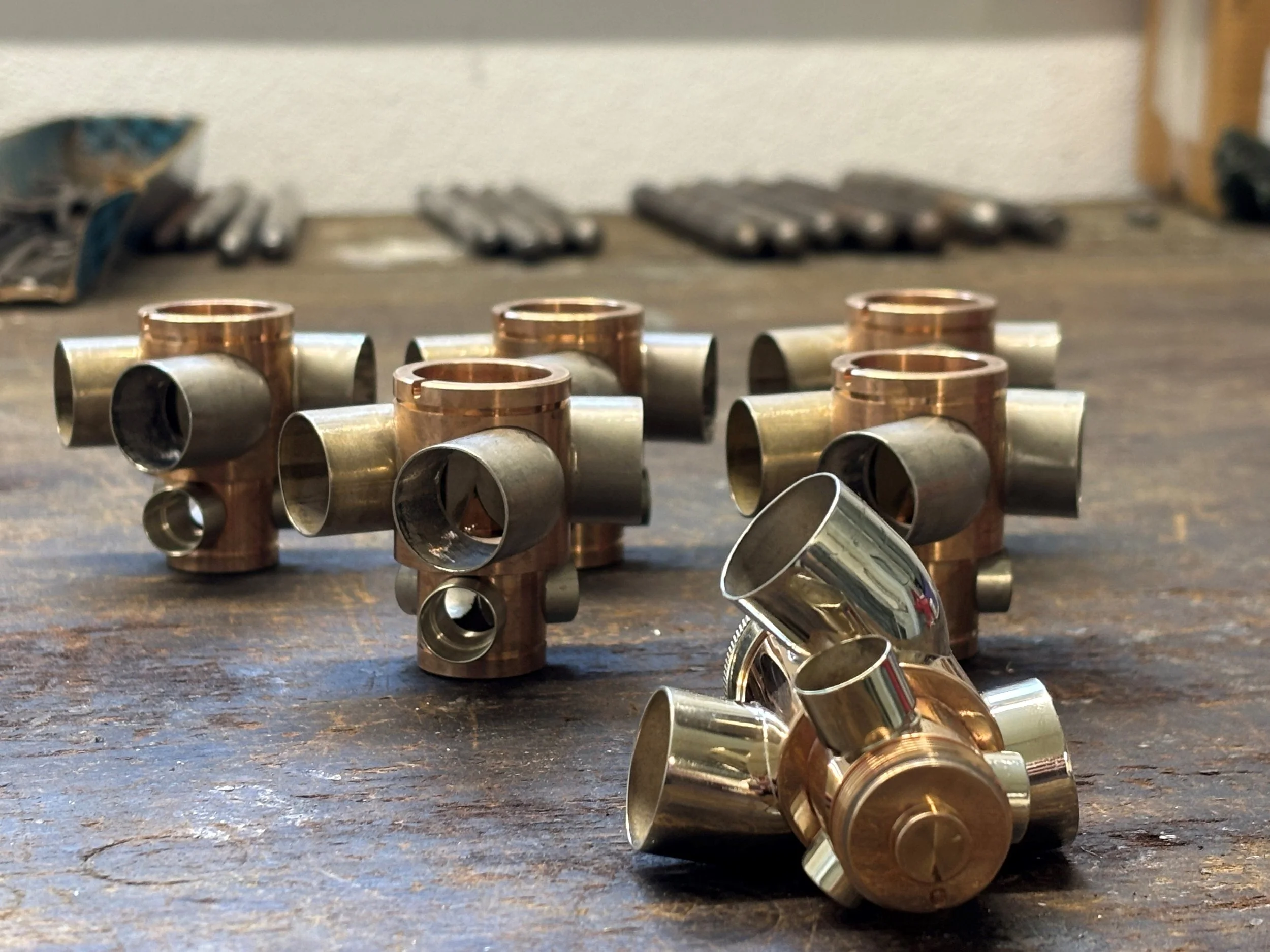
Tim’s idea was to make a rotor with a unique stepped design so that the rotor diameter where the f-alto mouthpipe passes through is considerably smaller than the section for the Bb mouthpipe. This would both shorten the cylindrical section and eliminate the deadspot, but it would need a completely new and unique design of valve that would require some expert engineering, so the project was passed on to our partner and Paxman valve maker, Benjamin Kain and his team in Germany.
The development of the Double Decker valve required many hours of R & D before the first prototype was ready. The valve delivered by Ben Kain looks simple enough but is a truly remarkable bit of engineering that delivers on both of Tim’s goals. As soon as the Paxman workshop had built a horn using the new valve, Tim took it off to try in the LSO and it was quickly declared a resounding success.
Keen to let the horn playing world see and try it, a second instrument has now been built and will be taken to shows and exhibitions from July and will also be available to try in the Paxman showroom in London.
This new valve represents an important upgrade to the Bb/f-alto horn and both Tim Jones’ concept and Ben Kain’s realization from concept to reality are innovations and achievements of which we hope and believe that Bob Paxman and Dick Merewether would have been proud.
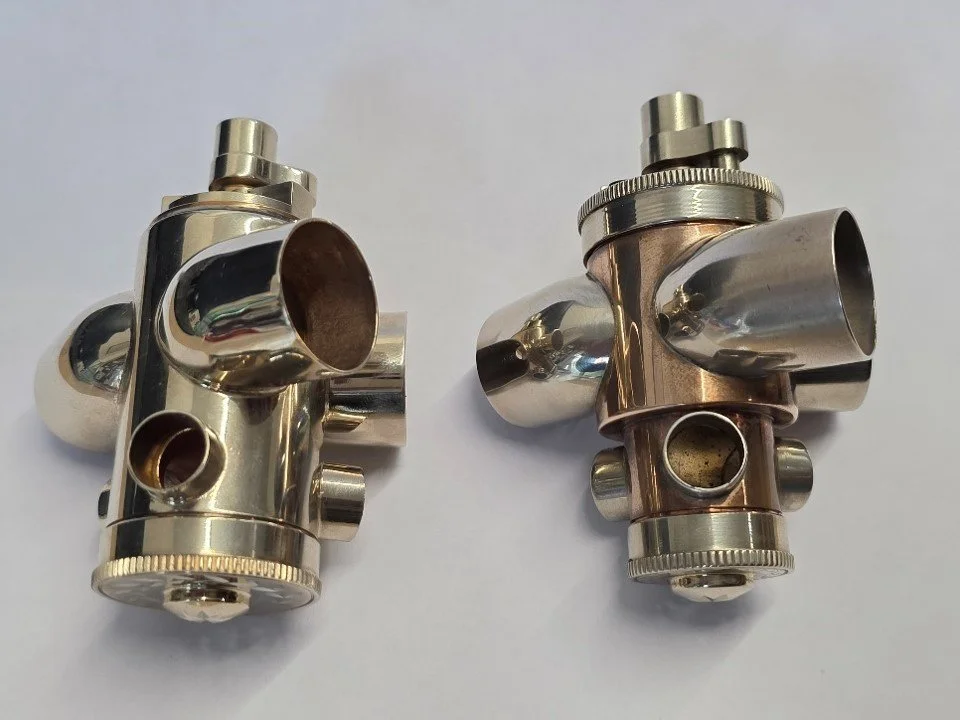
Standard Bb/f-alto change valve (left) and new Paxman Double Decker valve (right)